What is Vacuum Forming? A Comprehensive Guide from Basic Principles and Process Details to Industrial Applications
In our daily lives, opening a carton of eggs, tearing open the packaging of new headphones, or picking up a fresh produce tray in the supermarket—behind these actions lies a crucial technology that is revolutionizing modern packaging and manufacturing: vacuum forming.
For many purchasing managers, product designers, and engineers, understanding vacuum forming is not just about manufacturing a plastic box, but about finding the perfect balance between cost control, product protection, and production efficiency. This article, led by Wei-Hsien Industrial Co., Ltd., a professional vacuum forming manufacturer, will guide you through the mysteries of this plastic forming technology.
Chapter 1: Core Definition—What is Vacuum Forming?
Vacuum forming is the most fundamental and widely used branch of thermoforming technology. Simply put, it is a process that uses heat to soften plastic sheets and then uses pressure difference (vacuum negative pressure) to shape the sheets into specific forms.
1. Three Key Elements of Operation
Heat: Heating rigid plastic sheets (such as PET, PS) to a malleable state.
Mold: The carrier that determines the final shape of the product.
Vacuum: Removing air between the mold and the sheet, using atmospheric pressure to force the plastic to adhere to the mold.
Compared to injection molding, which requires melting the plastic into a liquid state before injecting it into the mold, vacuum forming preserves the original structure of the sheet, thus offering a significant advantage in terms of lightweighting and mold costs.
Chapter Two: Six Standard Processes of Vacuum Forming
A high-quality tray or folding box requires strict process control. Weixian Industrial insists on precision in every step:
1. Sheet Fixing and Heating
Fixing the plastic roll of appropriate thickness onto the frame. Using an infrared ceramic heater, the temperature is precisely controlled at the softening point of the material. Uneven temperature will result in color differences or scratches on the finished product.
2. Pre-blowing and Stretching (Pre-vacuuming)
For deeper products (such as long electronic boxes), air is blown into the heated and softened sheet to form a "bubble." This ensures a more uniform wall thickness at corners during subsequent vacuuming, preventing excessive thinning.
3. Mold Positioning and Sealing
The mold rises and contacts the heated plastic sheet, creating an airtight space.
4. Vacuum Forming
The vacuum pump starts instantly, removing the air. The plastic sheet completely replicates the texture and geometry of the mold surface in less than a second.
5. Cooling and Shaping
Forced ventilation or circulating cooling water is used to lower the temperature, allowing the product to quickly regain its hardness and ensuring no further dimensional changes.
6. Cutting and Punching
Finally, the finished product is demolded and cut using a precision punch. Weixian Industrial emphasizes "burr-free" processing, ensuring that every work tray or blister pack has smooth edges, preventing injury to hands and dust accumulation.
Chapter 3: Material Science – Building the Product's Skeleton
In Weixian Industrial's processing plant, the choice of materials determines the product's vitality.
Material | Characteristics | Application Scenarios
PET | High transparency, food-grade, environmentally friendly and recyclable | Cake boxes, fresh produce trays, high-end blister packs
PS | Most dimensionally stable, high molding precision | Electronic trays, antistatic carrier trays
PP | High temperature resistance, chemical corrosion resistance, microwaveable | Food linings, industrial trays for soldering furnaces
PVC | Low cost, good processability, excellent flame retardancy | Handmade boxes, stationery packaging, tool kits
Chapter 4: Why Do Companies Prefer Vacuum Forming? Four Core Advantages
1. High Cost-Effectiveness in Mold Development
The cost of vacuum forming molds (aluminum molds, bakelite molds) is only 1/10 or even less of that of injection molds. This greatly reduces the financial burden for new product development (NPI) or small-batch, diverse orders.
2. Extremely Short Lead Time
From design confirmation to mold development completion, it usually only takes 3-7 days. Wei-Hsien Industrial's one-stop service helps clients obtain prototypes in the shortest possible time and quickly bring them to market.
3. Extreme Design Flexibility
Whether it's a gift box lining requiring a flocked surface or a tri-fold box with a special structure, vacuum forming can easily achieve complex grooves and snaps through mold design, which might be extremely costly in other processes.
4. Superior Environmental Performance
Vacuum forming primarily uses sheet materials, and the remaining scraps can be 100% crushed and re-granulated, achieving a circular economy. This meets the requirements of modern enterprises for ESG and sustainable development.
Chapter 5: Advanced Challenges of Vacuum Forming: Antistatic and Precision Positioning
In the electronics industry, simple packaging is not enough. What are the barriers to entry for vacuum forming in the electronics industry? The answer is: ESD protection and precision.
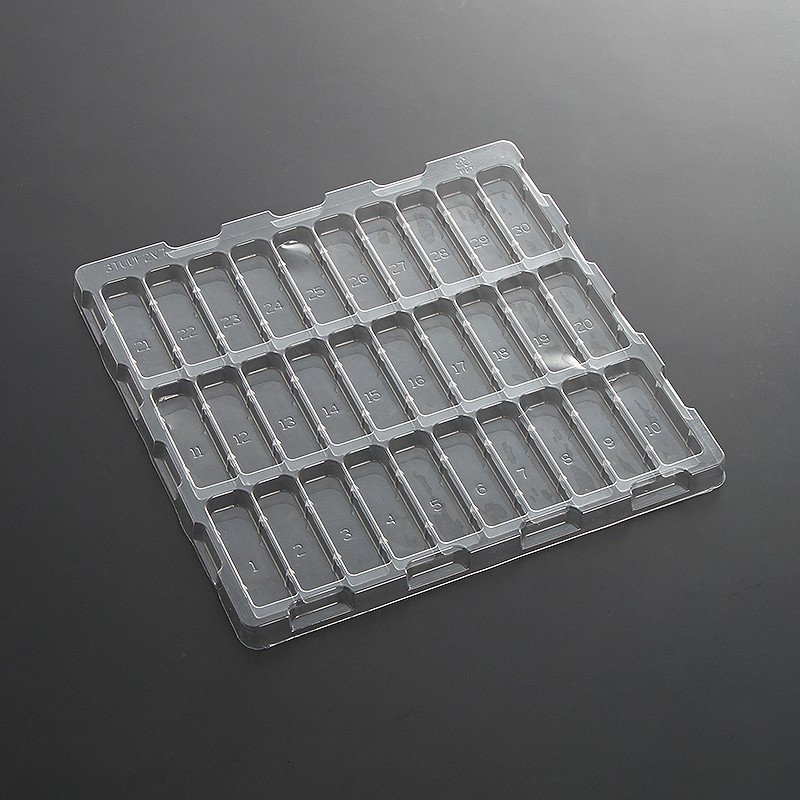
Antistatic Technology: Wei-Hsien Industrial's Tray work trays incorporate conductive carbon black or are coated with an antistatic liquid into the PS/PVC material. We ensure the surface resistivity is consistently within 10^6 × 10^9 × 10^9, effectively protecting sensitive chips from electrostatic discharge (ESD) damage.
Robotic Arm Alignment: On automated production lines, the dimensional tolerance of trays must be controlled within an extremely small range. We use high-precision CNC-machined aluminum molds to ensure the precise positioning of each slot, meeting the requirements of automated pick and place systems.
Chapter Six: Common Vacuum Forming Questions (FAQ)
To help you understand more deeply, we have compiled the most frequently asked questions from our customers:
Q: Are there any limitations on the thickness of vacuum-formed products?
A: Typically used for packaging thin parts between 0.2mm and 2.0mm, but can also be used for processing thicker parts.
Q: Should I choose a bakelite mold or an aluminum mold?
A: For small-scale testing (a few hundred pieces), a bakelite mold is sufficient; for long-term stable production or to achieve a high-quality surface finish, an aluminum mold is the only choice.
Q: Can vacuum forming be used for color printing?
A: Yes. We first perform sheet printing (pre-printing), then use precise alignment for molding. This is very common in gift box linings and blister packaging.
Conclusion: Choose Professionalism, Choose Weixian Industrial
After reading this article, you should have a comprehensive understanding of **"What is vacuum forming?"**. This technology may seem simple, but the mold temperature, pumping speed control, and material ratios are all accumulated processes.
Weixian Industrial Co., Ltd. is committed to providing customers with comprehensive solutions "from design to mass production." We have:
A first-class technical team to solve your structural design problems.
Advanced production equipment to ensure burr-free, high-precision finished products.
An honest and trustworthy business philosophy to guarantee on-time delivery and uncompromised material quality.
If you are looking for high-quality trays, folding boxes, blister packs, or lining designs, please contact Weixian Industrial. Let us use decades of expertise to provide the perfect protection for your products.
 什麼是真空成型?從基礎原理、工藝細節到產業應用的全方位指南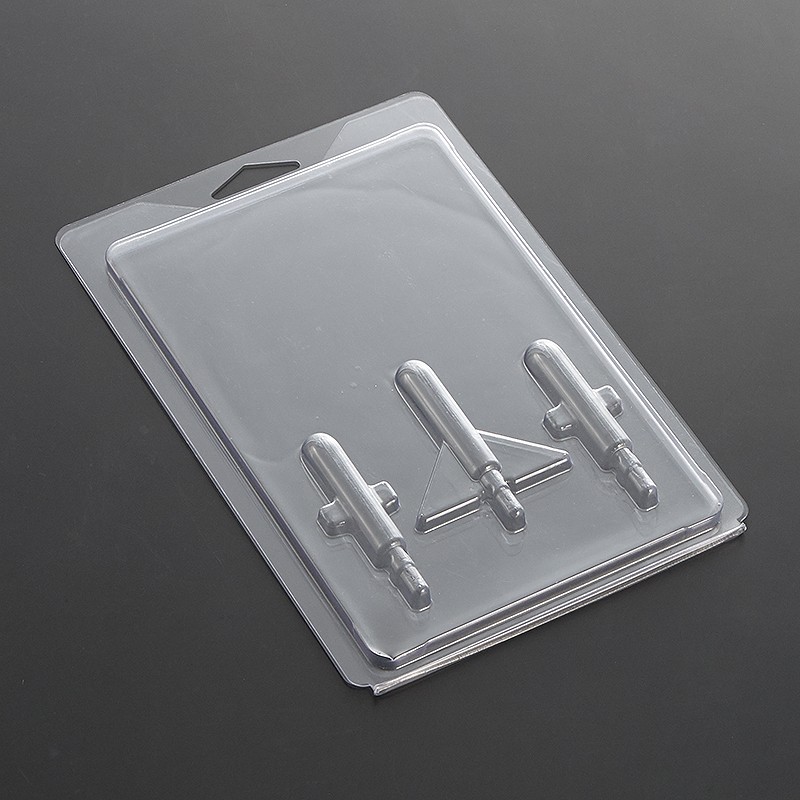
 第六章:真空成型常見問題 (FAQ)